

Chao Phraya River
The Chao Phraya River is the major river that runs through Thailand with its low alluvial plain forming the centre of the country, before flowing through Bangkok and then into the Gulf of Thailand. Chao Phraya is often referred to as Mae Nam, or Mae Nam Chao Phraya in Thai. It flows south through the nation’s fertile central plain for more than 225 miles (365 km) before reaching the sea.
The Chao Phraya River is a valuable waterway which has long been used for transporting the nation’s traditional exports, such as teak and rice. For centuries the Thai people have made use of the Chao Phraya, and particularly its canal (khlong) system, for drainage and recreation, as well as for fishing and as a source of water.
The Geography
The Chao Phraya River begins at the confluence of the Ping and Nan rivers at Nakhon Sawan (also called Pak Nam Pho) in Nakhon Sawan Province. After this it flows south for 372 kilometres (231 mi) from the central plains to Bangkok and the Gulf of Thailand. In Chai Nat, the river then splits into the main course and the Tha Chin River, which then flows parallel to the main river and exits in the Gulf of Thailand about 35 kilometres (22 mi) west of Bangkok in Samut Sakhon. In the low alluvial plain which begins below the Chainat Dam, there are many small canals (khlong) which split off from the main river. The khlongs are used for the irrigation of the region’s rice paddies.
Transportation
Major bridges cross the Chao Phraya River in Bangkok, which include the Rama VI railroad bridge, Phra Pin-klao near the Grand Palace, Rama VIII, a single tower asymmetrical cable-stayed bridge and Rama IX, a semi-symmetric cable-stayed bridge, as well as Mega Bridge on the Industrial Ring Road.
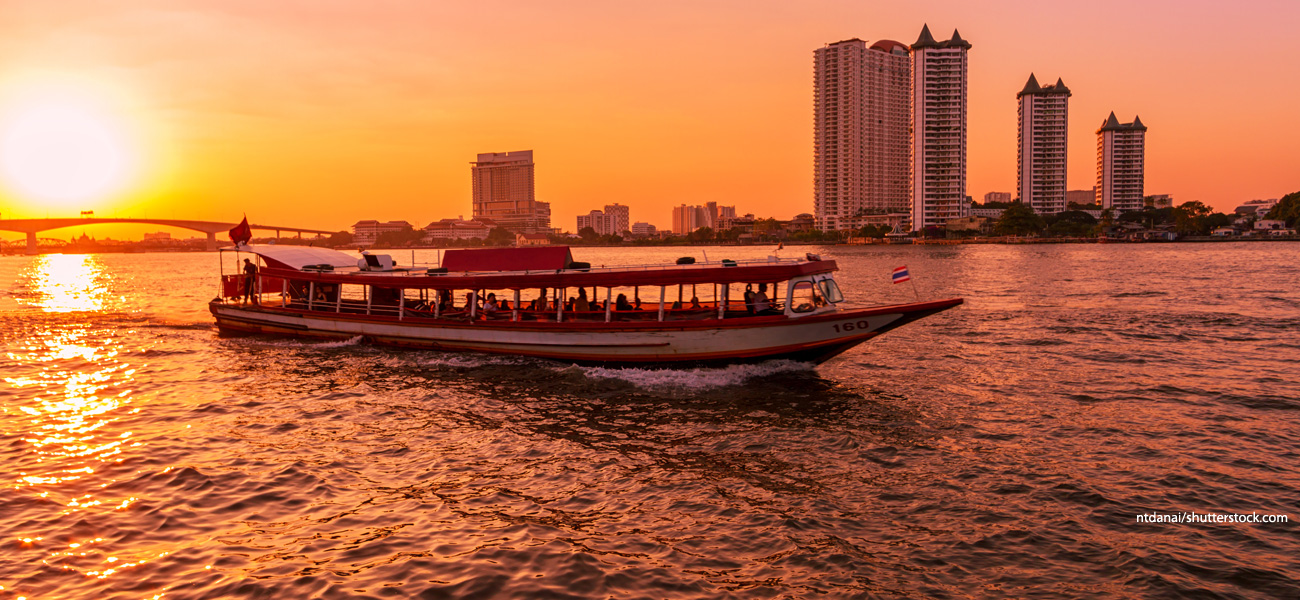
In Bangkok, the Chao Phraya is a major transportation artery for a network of river buses, cross-river ferries and water taxis. More than 15 boat lines operate on the rivers and canals of the city, including commuter lines.
Floating Markets
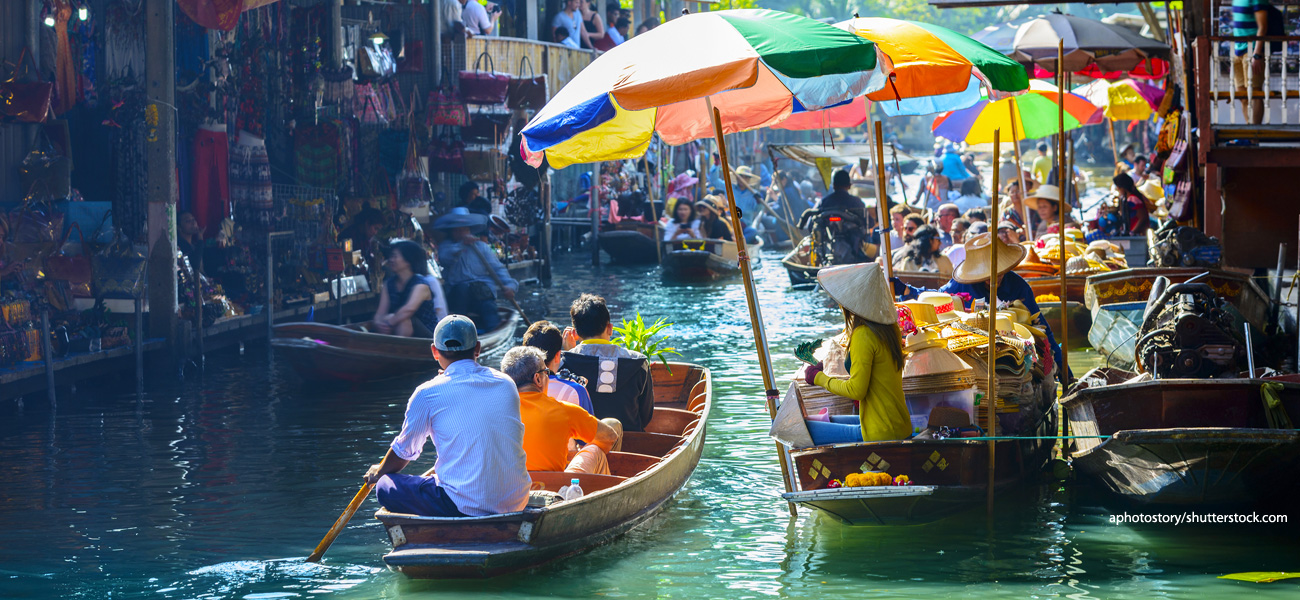
The river also plays an important role when it comes to floating markets, especially in the country’s capital, Bangkok. There are dozens of floating markets which take place on, or along the banks of the river. Some start as early as 5am each day, others operate at a more social hour over lunch. If you’re visiting Bangkok, a trip to at least one floating market is a must. Whether you opt to make your own way to the market, or prefer to join a tour with a personal guide, you’ll discover an exciting side to the city.
